
Hello. I'm Antoinette Beard/Sorelle Sucere, artist and writer of romantic mystery thrillers, kinky historical and fantasy fiction, short stories and occult info, --- alternative as hell. Welcome! This is dedicated to peace & kindness, --- to all the loving, intelligent, brave, wise, strong, gentle, sweet-and-geeky, humble-and-patient, whether they have hands, paws, hooves, wings, fins, or flippers and to all eager readers, everywhere. Scroll down to see yum stuff! ;)
Meanwhile...

Oh, yes, --- I write in a lot of genres, including Noir mystery and romantic western. I also re-tell traditional folk tales and make old fairy tales carefully cracked. I'm often awake very early in the morning. A cuppa, and fifteen minutes later I'm usually writing something. ;)
Tuesday, May 23, 2017

The Comacheros...
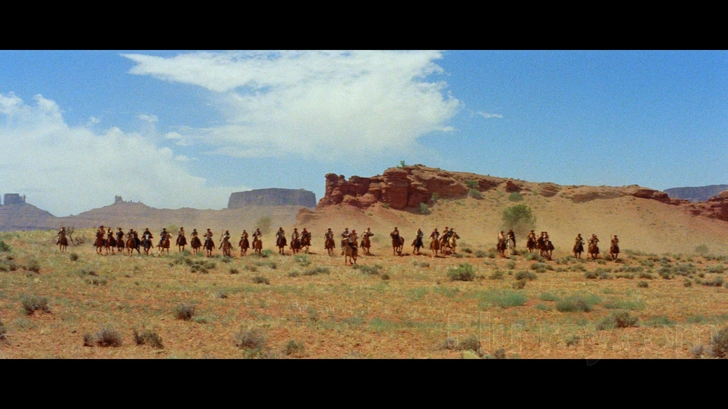
The Comancheros were primarily Mexican traders in northern and central New Mexico Territory who made their living by trading with the nomadic Great Plains Indian tribes, in northeastern New Mexico and West Texas. Comancheros were so named because the Comanches, in whose territory they traded, were considered their best customers. They traded manufactured goods (tools and cloth), flour, tobacco, and bread for hides, livestock and slaves from the Comanche. As the Comancheros did not have sufficient access to weapons and gunpowder, there is disagreement about how much they traded these with the Comanche.
In 1719, the Comanches made the first recorded raid for horses upon the settlements of the Rio Grande Valley. For the next 60 years, the relations of the Comanches with the Spanish and Pueblo settlements was a patchwork of alternate trading and raiding, with different bands being sometimes at peace and sometimes at war with the settlements along the Rio Grande. During the mid-18th century (1750–1780), the plains tribes, notably the Comanche, but also the Apache and other tribal groups, raided the Pueblos and Spanish settlements for horses, corn and slaves with ever-increasing frequency. This continued until 1779, when a 500-man army led directly[1] by the new young governor, Juan Bautista de Anza, and including 200 native auxiliaries, undertook a punitive expedition against the largest and most active group of Comanche raiders, who were led by a man known as Green Horn (Cuerno Verde), and, surprising the Comanches in their camp, killed Green Horn and dealt a severe defeat to the Comanches.[1] This show of force resulted in various Comanche war leaders acceding to peace over the next several years.[2] By the end of 1785 all, or substantially all, of the Comanche bands had agreed. On 28 February 1786 at the Pecos Pueblo a treaty between the Comanche and the Spanish in New Mexico was signed between Governor de Anza and Ecueracapa, a Comanche war chief who had been selected as a plenipotentiary for the Comanche nation.[3]
From the 1780s until the mid-19th century, the Comanchero trade flourished at different locales on the Southern High Plains, notably in northeastern New Mexico at Cejita de Los Comancheros in present-day Harding County and in the Palo Duro Canyon area of Texas near Quitaque in present-day Briscoe County.
Josiah Gregg described these traders as, "These parties of Comancheros are usually composed of the indigent and rude classes of the frontier villages, who collect together several times a year, and launch upon the plains with a few trinkets and trumperies of all kinds, and perhaps a bag of bread or pinole."[4] Some historians and writers have referred to the Comancheros as Mexican traders. While traders from Mexico were occasionally involved with the Comanchero trade, by far the majority were from New Mexico, Hispanics and people of mixed ethnicity. New Mexicans of the time were the descendants of the Spanish colonial settlers and soldiers and the Native American peoples of New Mexico. The Native American people in New Mexico included the Pueblo, the Comanche, the Apache, the Kiowa, and the Navajo. The Comancheros are distinguishable from the Ciboleros, the buffalo hunters from New Mexico. Both Comancheros and Ciboleros, however, were primarily Hispanics from New Mexico.
The Oatman's Ordeal...

From "Wild West"...
Royce Oatman left his farm in Illinois to search for paradise. instead, he found a place much like hell. On the evening of February 18, 1851, Oatman sat forlornly on a stone and surveyed a Godforsaken landscape of dust and alkali. In all directions of the compass lay an unending succession of arid mesas and rocky canyons; only the occasional scurrying lizard brought any sign of life.
At about sunset, Oatman finally abandoned himself to despair. Burying his face in his hands, he sobbed until his body shook. As his wife and seven children gathered around in concern, he cried out, ‘Mother, mother, in the name of God, I know something terrible is about to happen!’ It was. Oatman and most of his family would never see the Sun rise again.
Oatman had been a peaceful farmer back home in Illinois. in 1850, however, he had the acute misfortune to fall under the spell of a persuasive visionary named Jim Brewster. Brewster had scoured obscure religious texts for years before announcing a glorious discovery: God had designated a new kingdom of the righteous in Southern California. There on the banks of the Colorado River, he said, lay a blissful land of overflowing richness, where the Indians were’strictly men of peace, and never go to war.’
Oatman and the rest of Brewster’s converts left Independence, Mo., on August 9, 1850, 55 pilgrims in 20 wagons. The Oatman party consisted of the 43-year-old Royce, his wife, Mary Ann, and their seven children, including an infant son. For months the emigrants jogged along the Santa Fe Trail without incident. Then, shortly after crossing over into New Mexico, Brewster abruptly announced that he was now as close to ‘heaven’ as he intended to go. He set up a colony near Socorro Peak. It was left to Royce Oatman and 20 others to trudge onward toward their vision of Canaan on the Colorado.
By the time the tiny expedition reached the Mexican settlements in Arizona, scorching heat and scant fodder left the wagon teams barely able to stand. Towns along the way had tittle food to spare. More ominous were the deserted villages they found farther south, their inhabitants driven off by Indian raids.
The party reached Tucson in January 1851; only the Oatmans and two other families elected to keep going toward the Gila River, 100 miles from the Colorado. At Maricopa Wells, the three lonely wagons came to a Pima Indian village. The Pima were a proud and industrious people whose customs of generosity extended to passing white settlers, and the other two families elected to remain among them for another season. Oatman, however, was not a man to quit so close to his goal; a few more days’ journey would see him at Fort Yuma, on the California side of the Colorado. In the last bad decision of his life, Royce chose to push on.
It was a ghastly journey. The Oatmans had one yoke of oxen and two of cattle, and by now all the animals were dying in their traces. A contemporary newsman would later describe Arizona as ‘a barren, deserted, dreary waste, useful only as a dwelling place for the coyote.’ Royce Oatman could hardly have agreed more. Since leaving Tucson he had been on the edge of total breakdown, and by now only the calm assurances of his wife kept him going.
The Oatmans avoided the desert sun by traveling at night. When they reached hills, they first had to unload the wagon and then slowly push and prod the weary oxen toward the top. Finally on February 18, they found the Gila. They camped that day on an island in the middle of the stream, while the children, imagining themselves on a great adventure, chattered happily in the back of the wagon. The talk turned to what would happen if Indians attacked. Lorenzo, 15, said he would get a gun and fight them off; little Mary Ann, 7, said she would run away; and Olive, 13, vowed to kill herself before falling into the hands of the savages.
At sunset the family crossed the river and unloaded their wagon before manhandling the played-out oxen up yet another hill. At the top, they began to gather their goods for reloading. Lorenzo Oatman noticed the intruders first. A dozen or more shadowy figures were ascending the hill behind them in perfect silence. Then, with a thrill of horror, Lorenzo recognized them as Apache warriors, clad in wolfskins though apparently unarmed. Royce trembled with uncertainty for a moment, then quietly assured his son, ‘Don’t fear; the Indians will not hurt us.’
Oatman motioned for the Apache to sit down and talk. They asked in Spanish for a pipe to smoke in friendship; it was brought. For a while Oatman spoke politely with his new guests and all seemed well. Then one Apache asked for a gift of food. None could be spared, replied Oatman: his family was already down to stale bread and beans. Instantly the warriors flared with anger. They demanded something to eat, growing louder and more insistent with every minute. Finally, Oatman yielded and gave the Apache handfuls of bread, saying that it was robbing and perhaps starving his family.
This seemed to satisfy the Indians. They walked off by themselves a few yards and munched while they talked quietly together in their own tongue. Relieved that the immediate danger was over, Oatman told his family to finish reloading the wagon and get ready to move on. Mrs. Oatman climbed inside to arrange the articles her husband handed up to her as the children gathered to help.
Suddenly, like a clap of thunder from a clear sky, the Apache gave a bloodthirsty yell. Jumping up from where they sat, they drew short, thick clubs from beneath their wolfskins and rushed the astonished family. Lorenzo took the first blow, falling headfirst to the ground. His father was surrounded and beaten to death in an instant. Two attackers seized Olive and Mary Ann, holding them to one side while their companions quickly finished the work. In less than a minute, the rest of the Oatmans were beaten down and slain, Mrs. Oatman dying with her youngest son still clasped in her arms. Royce Oatman’s dream of Eden ended there, on top of a dusty hill in a land his worst nightmares could not have foretold.
For Olive and Mary Ann, the terrors were just beginning. Clinging to each other in tears, they could only watch helplessly as the Apache looted everything, breaking open trunks, stripping the dead of their boots and hats, even tearing the canvas top from the wagon.
Driving the Oatmans’ cattle before them, the Indians prodded the girls down the hill, back across the shallow Gila, and hurried off on a long trek westward. Olive’s and Mary Ann’s bare, bleeding feet were unable to follow the Apache across the rugged desert floor. Each time the children faltered, a brave would shout ‘Yokoa! ‘ and flourish his war club; the threat was unmistakable. Finally, Mary Ann collapsed, and neither threats nor kicks could move her. She was swung across a warrior’s back like a sack of grain, and the party plodded on.
Back at the wagon, the rest of Oatman family lay dead–all save one. Lorenzo had been temporarily paralyzed by the blow to his head, but remained conscious throughout the attack; he heard his two sisters screaming as they were dragged away, and he felt the Apache rifle through his pockets. Long after the attackers left, Lorenzo struggled to his feet, only to tumble headlong down a gorge. Afterward, he had alternating periods of awareness and confusion; he was convinced his brains had been knocked loose and were rattling around in his skull like marbles. He staggered back across the Gila and wandered uncertainly along the trail for two days. He once had to fight off a wolf pack by throwing stones. On the third day, as he was seriously considering the possibility of gnawing his own arm to stave off hunger, he heard horses approaching.
Two Indians in red shirts rode up, arrows notched in their bows. One leaped from his pony and dashed toward Lorenzo. Fate had smiled on the young man at last, for this was a friendly Pima from Maricopa Wells. ‘He embraced me with every expression of pity and condolence that would throb in an American heart,’ Lorenzo remembered. His ordeal was over. Within two weeks he was well enough to be carried to Fort Yuma.
During Lorenzo’s wanderings, his sisters’ nightmare went on. For two days and nights they continued their forced journey with only occasional stops for rest and hurried meals of beans, burnt dough and stringy beef about the size of one’s hand. On the morning of the third day they came to a grouping of thatched, half-buried huts where some 300 Tonto Apache dwelt. On sighting the two captives, a crowd of Indians came running. They danced around the forlorn pair with wild shrieks, cuffing them and spitting in their faces. It was a fair introduction to what was to come.
The Apache dubbed the Oatman girls the ‘Onatas,’ and soon made them understand their status in the tribe: they were slaves. ‘You have been fed too well,’ the Indians taunted; ‘we will teach you to live on little.’ The Apaches’ favored food was meat–deer, ground squirrel or snake–boiled into a kind of mush. This however was reserved for the men. The women of the tribe, and most especially female prisoners, were expected to spend every waking hour in quest of edible vegetation, such as yucca buds, wild onion, cactus root and prickly pear fruit. It was a miserable diet for the Oatman girls, requiring terrible labor to maintain a bare subsistence, and it was made all the more bitter by the taunting behavior of the Apache. ‘They invented modes,’ recalled Olive, ‘and seemed to create necessities of labor, that they might gratify themselves by taxing us to the utmost, and even took unwarranted delight in whipping us on beyond our strength.’
After a few months, the hardships eased a little. Having become reasonably conversant in Apache, the girls found themselves the objects of increasing curiosity, particularly among the tribe’s younger members. The Apache gathered by the hour around the girls, asking questions on a thousand subjects: How big was the great Auhah (sea) to the west? How many white people were there? Where did they live? Of what were the moon and stars composed? To all these queries, the girls answered as best they could from half-remembered schoolbook lessons. These sessions were a great amusement to the Apache, who would bellow with laughter over some of the girls’ more preposterous assertions about the size of the world and the shape of it. The whites must teach their children well, the Indians said, for them to become such great liars so young.
Back at Fort Yuma, Lorenzo Oatman tried desperately to interest the soldiers in rescuing his sisters. No one seemed to listen. The Gadsden Purchase had not yet been completed, legally, the Oatmans had been attacked outside the jurisdiction of the United States. Besides, the fort commander pointed out, the garrison was due for transfer soon to San Diego. In the end, Lorenzo himself journeyed to California, still imagining he would find help for his sisters somewhere, somehow.
One morning early in March 1852, the Oatman girls were informed that they had been sold. Espaniola, chief of the Mojave Indians living some 200 miles to the north, had taken possession of the captives in exchange for two horses and three blankets. That same day Olive and Mary Ann set out for the land of their new masters, accompanied by a war party and Espaniola’s young daughter Topeka. A year’s unremitting toil among the Apache had scarcely prepared the captives for the rigors of this new march. A small piece of beef was given to the girls on starting, and this and the roots they were allowed to dig was their sole subsistence for 10 grueling days.
On the morning of the 11th day, there came into view a lush, green valley through which flowed the broad Colorado. Its groves of cottonwood and small fields of wheat were a welcome change from the and wastelands of the Apache, although Olive felt little attraction to the ‘fierce, filthy-looking’ Mojave.
In some ways, the girls’ lot was better. They lived in the chief’s ki and found in Topeka more true sympathy and affection than any they had yet met in their exile. But in most ways, the drudgery of their lives was undiminished: ‘We soon learned that our condition was that of unmitigated slavery, not to the adults merely, but to the children.’ Each morning Olive and Mary Ann were roused from their blankets and sent out in quest of mesquite seed. This, ground up and boiled in water, was a principal food of the Mojave. Olive termed it ‘mesquite mush,’ a tasteless brew that churned in the stomach.
In stolen moments together, the sisters whispered hopes of escape, It seemed a distant possibility. They no longer had any real idea of where they were, and the nearest white settlements lay hundreds of miles distant over a trackless desert. Then, a few months after the captives’ arrival, the Mojave took their own unique precautions against flight. Using a sharp stick and a paste of powdered turquoise, they tattooed each girl’s chin; this would mark them as Mojave property to any tribe they might meet in a dash for freedom.
Yet life among the Mojave was not without small consolations. The chief’s wife, Aespaneo, gave the sisters a tiny garden to grow their own food. The Mojave frequently asked the captives to sing for them, and the girls would respond with Sunday school hymns and little songs of Mother Goose. The delighted Indians would reward their captives with presents of beads and small scraps of red flannel.
After Olive and Mary Ann had learned the Mojave language, they found themselves again bombarded with endless questions about the whites and their way of life. Once, Olive tried to describe how one could plow the soil and increase the Mojaves’ wheat yield tenfold. Her captors answered with scorn, ‘You whites have forsaken nature and want to possess the earth, but you will not be able.’ Her explanations of Christianity brought shrieks of merriment. ‘When you go up to your heaven, you had better take a strong piece of bark and tie yourself up,’ one squaw scoffed, ‘or before long you will be falling down among us again.’
The laughter soon stopped as the autumn of 1853 brought tragedy to captors and captives alike. There had been no rain the year before, and the meager crops of the Mojave failed. The dwindling supply of mesquite seeds could no longer meet the tribe’s needs; it was a time of terrible hunger, then starvation. Mary Ann, who had never fully recovered from her forced marches across the desert, weakened at an alarming rate. Olive frantically searched for roots and blackbird eggs to keep her sister alive, but most of these were confiscated by the Mojave for their own dying children.
In the end, Mary Ann could no longer move. She lay in the shade of a cottonwood tree and weakly sang songs to herself; the Mojave would often gather to listen. Some of them would stand for whole hours and gaze upon her countenance as if enchanted by a strange sight, even while some of their own kindred were dying in other parts of the village.
Late one evening, Mary Ann said to her sister: ‘Olive, I shall die soon. You will live and get away.’ All too quickly half of that prophecy came to pass. Mary Ann wasted away and died, her sister recalled, ‘as sinks the innocent infant to sleep in its mother’s arms.’
The Mojave customarily burned their dead. Aespaneo, however, was able to get her husband’s permission for Mary Ann to be buried in the little garden she and her sister had tilled. In her third year of captivity, Olive Oatman found herself alone among the Indians.
‘This was the only time,’ Olive later recalled, ‘in which, without any reserve, I really hoped to die.’ She expected and hoped for–nothing better than to starve to death. However, one morning Aespaneo came with a handful of corn meal ‘in a sly and unobserved manner, and enjoined secrecy upon me.’ It was part of the tribe’s last reserves of seed corn. This, with a little mesquite soup kept Olive alive. By March 1854 the appearance of fish in a nearby lake rescued the Mojave from wholesale famine. Rains again overflowed the Colorado and brought new life to the Mojave Valley.
Yet no sooner had this danger passed than a new one threatened. In the spring of 1854 the Mojave made war on the Cocopah, a numerous tribe dwelling some 700 miles distant. The day the war party left, Olive learned to her horror an unfailing custom among the Mojave: whenever one of their warriors died in battle, a prisoner was sacrificed to appease his angry spirit. Since Olive was the only captive in the village, her death now seemed certain. For five long months the girl’s every waking hour was haunted by fear; she alternated between despair and wild impulses to run away to the hills. In the end, her delivery seemed nothing short of miraculous–the Mojave triumphed over their enemies without losing a man. ‘I buried my face in my hands,’ she said, ‘and silently thanked God.’
Olive soon had good reason to be grateful that her planned escape was never attempted. A young Cocopah girl, Nowercha, was brought back to the valley as a prisoner; the next night she ran away. Captured by a neighboring tribe, the fugitive was brought back to the Mojave. Olive was forced to watch as Nowercha was crucified and slowly shot full of arrows.
Afterward, Olive ‘thought it best now to conciliate the best wishes of all, and by every possible means, to avoid all occasions of awakening their displeasure.’ Setting aside hopes of rescue or escape, she settled as best she could into the life of a true Mojave, buoyed by the continuing friendship and support of Aespaneo and Topeka.
Although she had no way of knowing, Olive possessed one other fervent ally. For years her brother had carried on his own relentless battle in California, pleading with strangers and demanding justice from local officials. Nothing happened. ‘I learned,’ Lorenzo observed, ‘that men do not come across the plains to hunt captives among the Indians.’ He joined various parties of miners exploring Southern California, always hoping to turn them toward Arizona. In 1854, hearing that a new garrison had returned to Fort Yuma, Lorenzo sent a letter requesting the Army’s help. Yes, he was told, there were two girls being held captive by the Mojave, but no one knew what to do. Furious, Lorenzo wrote the editor of the Los Angeles Star, detailing the tragedy and describing the indifference he had received.
The Star responded with a blistering editorial, damning the Army as a pack of incompetents and cowards. With publicity briefly reviving interest in the Oatman girls, Lorenzo hurriedly petitioned California’s Governor Johnson to raise an expeditionary force. Johnson replied that he was more than willing to do so, but lacked the necessary authority. He kindly suggested that Lorenzo contact the Indian Department in Washington. Wearily, Lorenzo began drawing up yet another petition, having no faith that it would prove more useful than the others. Unknown to him, however, the Star’s editorial was to have unexpected and fateful consequences for his lost sister.
Henry Grinnell was a carpenter at Fort Yuma, friendly with many of the tribesmen who traded at the fort. One night in late January 1856, he was awakened by someone creeping into his room; Grinnell jumped from bed, his pistol cocked. The intruder was Francisco, a Yuma Indian. When Grinnell demanded to know what he was doing there, the Yuma said only that he wanted to chat awhile, ‘Carpentero, what is this you say so much about two American girls among the Indians?’ Francisco asked.
‘I said that there were two girls among the Mojaves or Apaches,’ Grinnell replied. ‘And you know it, and we know you know it. Now listen to this.’ So saying, Grinnell picked up a copy of the Los Angeles Star and began reading aloud the Oatman article. The crafty carpenter did not stop when he reached the end of the story; still pretending to read, he added his own imaginative conclusion. The president of the United States, Grinnell declared, had ordered 5 million American soldiers to surround the Mojave Valley and slaughter every single Indian living there unless the Oatmans were released unharmed.
Francisco was impressed. ‘I know where there is one white girl among the Mojaves; there were two, but one is dead,’ he said. ‘You give me four blankets and some beads, and I will bring that girl here in 20 days.’
After a hurried conference with the fort’s commander, the deal was struck; Grinnell himself would stand payment for the blankets and beads. On February 8, Francisco and three companions set out for the land of the Mojave.
Olive Oatman was digging groundnuts on the morning she heard of Francisco’s arrival. Rumors buzzed among the Mojave; some said the Yuma had come to seek ‘Onata’s’ release. But if the captive’s hopes were raised by this news, they were soon dashed. Olive was seized and carried to the chief’s ki, to be confined there while the Mojave council debated Francisco’s offer.
Olive had little faith in the wisdom of the council, a body she considered ‘an aimless convening of wild maniacs.’ They could as easily decide to kill their hostage as to release her. After three long days, she was taken out and plastered with mud, giving her ‘a dun, dingy color, unlike that of any race I ever saw.’ She was ordered to speak only in gibberish; if Francisco was given any reason to think her an American, her life would be forfeit on the spot. ‘They had told Francisco that I was not an American, that I was from a race of people much like the Indians, living away from the setting sun.’
Dragged before the council, Olive came face to face at last with her would-be rescuer. The Yuma showed her a note, the first writing she had seen in five years: ‘Francisco, Yuma Indian, bearer of this, goes to the Mojave Nation to obtain a white woman there, named OLIVIA. It is desirable she should come to this post, or send her reasons why she does not wish to come. MARTIN BURKE, Lieut. Col. Commanding.’
Olive then spoke to Francisco in plain English. She told him who she was; she spoke of the planned deception by the Mojave. Francisco jumped up in a fury. If the Mojave refused to release the girl, he said, that was well and good. He would return to Colonel Burke and tell him this; the white soldiers from the fort would come to take up the argument.
The council erupted into shouts and threats. Some said they should kill the girl; others wanted to fight the soldiers. Most wished to make the best of a bad situation–take what they could get for Olive and send her back to the fort. In the end, Chief Espaniola demanded that a horse be thrown into the bargain–and Topeka must accompany Olive to Fort Yuma to be certain the Yuma did not steal Onata for themselves.
The next day, after a last breakfast of sour mesquite mush, Olive set out with her traveling companions. Before leaving, she lingered awhile at the grave of her sister, ‘who had come with me to that lonely exile; and now I felt what it was to know she could not go with me from it.’ Olive had wanted to take along her beads and scraps of cloth–‘I prized these beads beyond their real value, especially one string that had been worn by Mary.’ But this the Mojave denied her. She would take nothing but the bark garments she wore. Olive contented herself with keeping a few of the groundnuts that she had spent the better part of five years gathering for her captors.
The long trek toward freedom lasted little more than a week. It was without incident until Olive came to the ferry that was to take her across the Colorado. Here she hesitated. She did not wish to enter the fort wearing only bark garments. In the end, an officer’s wife sent over the gift of a gaily colored party dress.
On the morning of February 28, 1856, with the guns of Fort Yuma booming a salute and the entire garrison turned out to give three cheers, Olive Oatman returned to her people at last. Her journey to Fort Yuma, begun with her family at Maricopa Wells amid such hopes and anxiety, had been delayed by five years and 10 days.
Olive was incoherent for several days after her release. Shocked by the abrupt turn of events that gained her freedom, she was scarcely less dumbfounded to learn that the brother she had long thought dead was alive in California. Lorenzo soon rejoined his sister at Fort Yuma. Together they traveled to Jackson County, Ore., to take up residence with a cousin. There, an enterprising gentleman named Royal Stratton interviewed the pair and set down their adventures in a book, Captivity of the Oatman Girls, which sold out three separate editions. In 1858, Olive journeyed east to deliver a series of popular lectures. All this left her a relatively wealthy young woman, able to continue her neglected education in prestigious schools.
While in New York, Olive was introduced to John B. Fairchild; they later married and settled in Sherman, Texas. They adopted a child and lived happily for many years. Olive died in 1903 and is buried in Sherman.
In 1909, a Mojave Indian who called himself John Oatman was instrumental in having the village of Vivian, Ariz., change its name to Oatman. John claimed to have been the son of Olive Oatman, though few people of the time seem to have taken this claim seriously. Nonetheless, the little town of Oatman still stands today, 25 miles southwest of Kingman. Its chief claim to fame (besides an extremely tenuous and doubtful connection to the Oatman tragedy) lies in the fact that Clark Gable and Carole Lombard spent their honeymoon at the Oatman Hotel.
To the end of her life Olive kept near her a small jar containing those same groundnuts she had once gathered with a heavy heart in a land now far distant, a bitter remembrance of frequent cruelty and occasional kindness among a people more given to the former than the latter.
Monday, May 22, 2017
The Adams Legend & Possible Locations Of The Lost Apache Gold...

Adams, for whom the legend of the lost gold became known and whose first name forever has been lost to history, was born in Rochester, NY July 10, 1829.[2] In August of 1864 he was journeying in his wagon from Los Angeles to Tucson.[3] After Apaches set his wagon on fire, Adams drove a dozen saved horses towards Sacaton, Arizona, with the hope to sell them. In Sacaton, Adams met a group of twenty one miners led by John Brewer traveling together in search of the gold fields. The party also accounted the Pima-Mexican guide who promised the prospectors to lead them to the valley of gold :“I know a place where canyon walls cry tears of [gold] every day! And those tears are larger than your coins!” Supposedly, In 1862, the young Pima-Mexican had gone on an expedition with the Apaches when those attacked Pueblo Indians in western New Mexico. While on the expedition he had seen gold nuggets that were larger than oak nuts. The young man had appreciation for works made out of silver and turquoise but had no knowledge of gold value. The miners made a bargain with the guide who only asked for a horse, a saddle, a weapon and some of the gold in exchange. The group was badly in need of horses, and when by fate Adams appeared in Sacaton with his twelve head, Brewer struck a deal with Adams on the terms that Adams would share leadership with him in exchange for donating his horses.
Twenty-two men set out on August 20.[4] Along with their guide the group followed White River and its east fork into the White Mountains and entered western New Mexico. The guide paused and pointed to two mountains that were shaped like sugar loaves. “The gold canyon lies at the foot of those peaks,” the guide said. According to Adams, from that mountain lookout the miners were able to observe San Francisco Mountains. Adams thought that this mountain range was located on Mt. Ord, or on one of the mountaintops nearby. The miners entered a canyon with a fantastic gold deposit through 'the Little Door', as Adams referred to it. He said that the passageway was so narrow that the riders had to enter it one by one. They descended a canyon via a Z-shaped trail. At the bottom of the canyon was a spring with a low falls above it.[5]
Within a few days the group collected a fortune of gold nuggets that they hid in a corn-grinding basin left by ancient Indians. The young guide left the miners on the first night after the discovery and after being paid. Before leaving the guide issued a warning. He told the group not to stay long in the canyon that was a campsite for Apaches. Apache Chief Nana and 30 warriors appeared the second day. The chief told them not to go above the falls. Some of the men started construction of a cabin. A cache of the gold was hidden under the cabin's hearth stone.[6] The miners continued to mine the gold until they ran out of supplies. The party decided to send Brewer and five others to buy more supplies at Old Fort Wingate, west of modern Grants.
After Brewer's party left, some of the men began secretly searching above the falls. They returned to camp with large nuggets. Adams warned them against it but the nuggets were kept.[7]
Nine days after the provisions party did not return, Adams became concerned about their safety. Along with another miner named Davidson, Adams climbed out of the canyon to discover five bodies on the trail, Brewer was not among them. They raced back towards camp, but it was too late. A large party of Indians had reached the camp and killed the remaining miners. The cabin had been set on fire, making the hearth stone too hot to move.[8] Thirteen days later, Adams and Davidson were found by a military patrol out of Fort Apache, AZ.[9]
Upon recovery Adams settled in California and when the Apache Wars ended, he led several expeditions to find the canyon and the basin filled with gold. Adams must have had a terrible sense of direction, after so many years of searching his quest proved hopeless. But in his search he inspired others to joint the hunt.
In July 1949, 83-year-old Robert W. "Bob" Lewis, who said he had known Adams when he had been a cowpuncher and law officer in Socorro County, New Mexico, stated that he and Adams searched for the gold together in 1889 twenty five years after the massacre in 1864. But it was not until 1918, that he claimed to have single-handedly found the skeletons and Adam's cabin at the mouth of a canyon 35 miles northwest of Magdalena, New Mexico. Lewis said that everything was there just as Adams had described except for the gold. He said he later found out the missing gold had been found by a Magdelena Sheepherder who received $20,000 for it with which he bought a ranch in Albuquerque, New Mexico.[10
Zuni Mountains were considered the most plausible location of the diggings. Thousands of prospectors, ranch-hands, and men-of-fortune searched this area and the rest of southwestern New Mexico prior to World War II, as the Adams diggings became the most sought-for gold in the country. Only Frank Dobie's 1939 book Apache Gold and Yaqui Silver adequately describes how renowned the Adams legend had become. The combination of the depression and the deregulation of the gold market prompted the most unlikely people to search for the diggings. Between 1895 and 1930 several large logging communities flourished in the Zuni Mountains, several with schools and post offices; wide-gauge railroads crisscrossed the mountains. The loggers were well aware of the Adams legend, as it had become a nationally known story. Between running logs nothing was more common than prospecting except for drinking. Rumors of gold in the Zunis had become so common that the U.S. government ordered several geological expeditions in the years between World War I and World War II to verify whether this claim could be supported. The geologists found nothing. In the 1950s the area was thoroughly re-explored for uranium during the uranium boom around Grants, New Mexico. Eventually the obsession with the Zuni Mountains as a host for the Adams diggings faded. It was also around the mid-century that the popularity of the Adams legend began to diminish and the Lost Dutchman Mine became America's most sought-for lost gold mine. The Adams diggings were beginning to seem a hoax or a mine unlikely to ever be found.
Geologically, the Adams diggings could only be in the southwestern quadrant of the state. Adams himself spent most of the remainder of his life searching the areas in and around Reserve, New Mexico. This area was the largest gold producing area in the state, and hosted several small mining booms, including the rich strikes at Silver City and Pinos Altos. The areas that could conceivably host the diggings in this region (containing several large mountain ranges that remain sparsely inhabited) are numerous, as minerals and evidence of previous mining can be found throughout the area. Local folklore will tell you that the gold is at the headwaters of either the Black River, the Gila River, or the Prieto River. Spanish Lore will tell you to look to the Blue Mountains. Dozens of mining camps in this region of New Mexico were thought to be the Adams diggings for brief periods, until each proved itself to be less rich than at first indicated: egregious hopes followed by rapid disappointment. That seems to be the story of gold in the desert southwest.
The Datils and Gallinas Mountains and the basins to the north of these mountains were considered possible locations for the diggings that increased in popularity as the other locations lost appeal. Dick French, in his book Four Days from Fort Wingate,[11] places the diggings in this area. It has become known as "Dick French’s area," although his location was known to have been found by others in the 1950s, if not earlier. A follow-on work by Dick French, Return to the Lost Adams Diggings: The Paul A. Hale Story[12]published in 2014 uses historical, artifactual, geographical, and geological data to demonstrate the viability of the location in the new book as the locality of the Lost Adams Diggings. The new book demonstrates the presence of significant gold mineralization, adds a wrinkle to the story by presenting evidence of colonial Spanish activity in the area dated to the 1600s, and identifies and locates every critical landmark. The new book contains maps, pictures of artifacts, assay reports, and is written in a conversational format with Dick interviewing the re-discoverers Paul Hale and Ronald Schade.
A similar but geographically less plausible location was found in eastern Arizona by Don Fingado near Clifton. The site contains features described by Adams much like the area favored by Dick French; however, the gold remained undiscovered.
In some minds the gold was to be found on either the Zuni or Navajo reservations, but the laws preventing the acquisition of mineral rights in these regions have discouraged searching.
There are other sites, but the leading candidates in the popular imagination are mentioned above. If it really exists, its traditional location remains within "Apacheria" or the southwest quadrant of New Mexico and bordering areas in Arizona. The complexity of the story is detailed in Jack Purcell's definitive book on the subject, The Lost Adams Diggings: Myth, Mystery, and Madness. This work, unlike its predecessors, is a serious attempt to give historical perspective supported by cited research. Purcell believes that the gold exists and is perhaps somewhere in the mountains just south of Quemado, New Mexico. Perhaps gold will be found someday, but in the minds of most, the legend is fading away among the other items in the forgotten annals of American lore.
The many stories arising or deriving from the lost diggings have inspired many to search for lost Apache gold ever since. Its legend has supplied many folk tales, stories and books with ample fuel for fantasies of lost treasures, hidden canyons, Apache secrets and gold "somewhere out there" in the wilds. Another supposed Indian name for the mine was "Sno-Ta-Hay," which supposedly means "there it lies" i.e. the gold is on the ground and can be picked up or panned as a placer mine. Chief Nana supposedly called it that when he first warned the Adams party before the attack. As previously mentioned, J. Frank Dobie devoted half of his book "Apache Gold and Yaqui Silver" (now in its ninth printing) to the story of the Lost Adams Diggings and considered it to be the greatest "lost mine" story of US history. The amount of mail being sent to western New Mexico during the 1930s prompted the government to create a new post office in the area affectionately named "Lost Adams Diggings, NM;" the post office has since closed.
The many stories arising or deriving from the lost diggings have inspired many to search for lost Apache gold ever since. Its legend has supplied many folk tales, stories and books with ample fuel for fantasies of lost treasures, hidden canyons, Apache secrets and gold "somewhere out there" in the wilds. Another supposed Indian name for the mine was "Sno-Ta-Hay," which supposedly means "there it lies" i.e. the gold is on the ground and can be picked up or panned as a placer mine. Chief Nana supposedly called it that when he first warned the Adams party before the attack. As previously mentioned, J. Frank Dobie devoted half of his book "Apache Gold and Yaqui Silver" (now in its ninth printing) to the story of the Lost Adams Diggings and considered it to be the greatest "lost mine" story of US history. The amount of mail being sent to western New Mexico during the 1930s prompted the government to create a new post office in the area affectionately named "Lost Adams Diggings, NM;" the post office has since closed.
The 1963 novel MacKenna's Gold by Heck Allen is loosely based on the Adams legend. The novel was made into a film in 1969 with the title Mackenna's Gold. Numerous other books about, or based on, the diggings have been written.

Friday, May 19, 2017
Subscribe to:
Posts (Atom)